
Sabina, the perfect setting for a cooking holiday
Between Rome, Umbria and Tuscany, Sabina is central Italy's best kept secret. More rural and densely green than Tuscany and Umbria, it is also a lot less tourist-plundered. It has olive groves, vineyards, medieval hilltop stone villages and ancient monasteries ; but more than anything, Sabina has true ingredients in its fields and woods which have earned it the label ‘paradiso gastronomico’. We are an easy train ride, just 40 minutes, from Rome. This is why Sabina is the ideal location for our Italian cooking holidays.
In spring and summer, the land is patchworked in delicious and coniferous Botticelli greens. Hills are laced with narrow white tracks and roads that loop like spaghetti, reaching villages and hamlets that cluster on the hilltops. Wheat fields are strewn with poppies, and slopes are neatly planted with groves of olive trees. Wild greens are collected in a countryside ritual, with the most tender shoots eaten as salad. In winter and early spring fruit trees are bursting with the sweetest oranges, apples and pears of all different shapes and sizes. June is the month for cherries, beautifully dark red and very sweet. In summer and until autumn, you’ll see peaches, apricots and fresh figs everywhere.
With over 2,5 million olive trees in the Sabine Hills, olive oil remains the key economic food resource due to the high quality single-estate oils that are so low in acidity, extra smooth, spicy and rich. Every village grocer has its own cured meats and salami counter. Boxwood crates of locally harvested produce, from baby purple artichokes to the speckled pink pods of borlotti beans, are displayed in tiers.
Sabina is also famous for its pecorino cheese produced by local shepherds, wood-fired oven baked focaccia and biscotti and beautiful raw honey.
Sabina is truly a magical land of panoramic views across its valleys, olive groves and vineyards, fields of sunflowers and wild Mediterranean herbs, medieval hilltop villages, castles, and majestic Roman ruins set in wild nature.

Fara Sabina
Travel back in time to this ancient, unspoilt and beautifully kept hilltop village. Fara Sabina’s foundation dates back to the 7th Century AD, when a group of Lombard invadors built the original stone castle. It has splendid remains of a monastery, handsome renaissance palazzi, ancient alleyways and a weekend market place that’s buzzing with activity. Fara sits high on a hill, from which there are spectacular 360º views over the whole region and its mountains, hills, valleys, olive groves and vineyards. On a clear day, you can see Rome and St Peter’s dome from here.
As usual in Sabina, there are no huge car parks or souvenir shops here! Moreover, Fara Sabina is famous for its delicious oven-fired sourdough fresh bread and focaccia made in a 500 year old bakery.

Toffia
One of the most unspoilt and better kept medieval hilltop villages in the Sabine Hills, Toffia is full of ancient restored palazzos, churches and small piazzas from which it is possible to admire sweeping views of olive groves and vineyards in the surrounding valleys. As other villages in the region, Toffia’s beauty has not been yet discovered by mass tourism and retains all its authenticity.

Castelnuovo
Castelnuovo is an enchanting village built in the middle ages to better defend the powerful Farfa monastery nearby. It has an interesting olive oil museum, a historic bakery museum and several fine renaissance palazzi, including Palazzo Galli with its magnificent renaissance gardens. The historic homes have been lovingly restored to reflect the colours of Giotto paintings.

The Monastery of Farfa
Nestled in the Sabine Hills is Farfa Abbey, one of the most important monasteries in European history, more influential and powerful than Cluny in France. Founded in the VII century, Farfa became ‘Imperial Monastery’ under Charlemagne. Vast territories of central Italy belonged to Farfa, including the cities of Siena, Perugia, Assisi and many others. Still today this monastic complex looks majestic, with a basilica, a tower-library containing thousands of rare manuscripts, artist’ workshops and buildings all dating back to the middle ages. Farfa was also featured in the third episode of the famous British chef, Jamie Oliver, on his TV show ‘Jamie’s great escape’.
The village of Farfa has an interesting number of shops, all relevant to our gourmet and cookery holidays and vacations. This includes the monastery’s herbalist shop, a ceramic workshop and kiln and an award winning 100 year old hand-made fabric shop. The delicatessen sells cheeses and wines from Sabina. Farfa is one of the hidden treasures that can be visited during your Italian cookery holidays and one-day cooking classes.
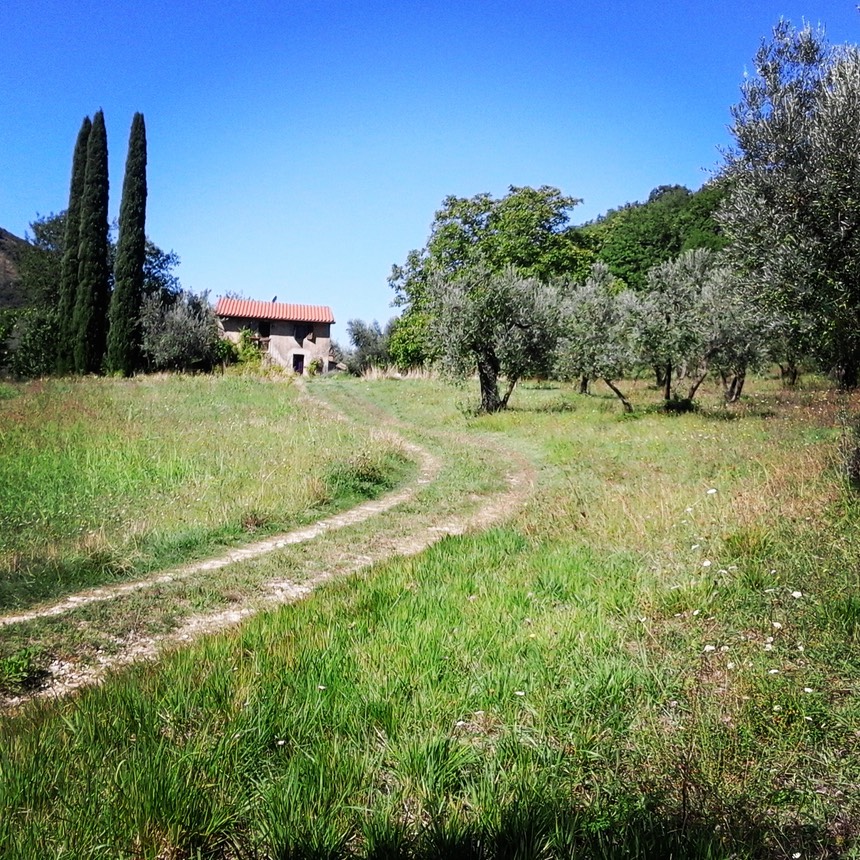
The beautiful Sabine Hills countryside